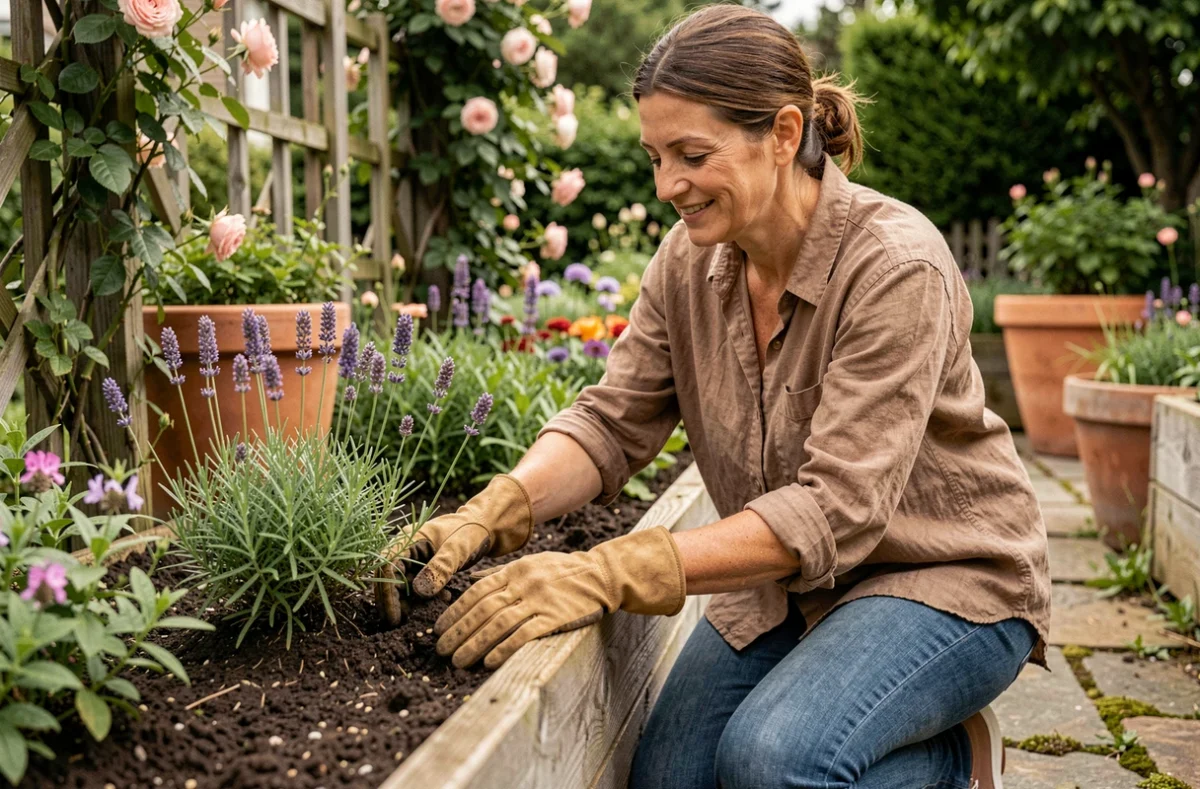
A garden that struggles in August and becomes waterlogged in January has a design problem, not a decorating problem. Creating a sustainable garden means starting with the soil and local climate before choosing a single plant or patio surface.
Climate change is also shifting the landscape: Mediterranean plants such as the strawberry tree and olive tree can now grow in some gardens in northern France, provided the soil drains winter moisture properly and the species can withstand frost.
Soil and drainage: the invisible foundation of a garden that can withstand extremes
Before drawing up a plan or browsing a catalogue of perennials, pick up a handful of soil. Clay soil holds water in winter, potentially suffocating roots. Sandy soil lets water drain away in summer, leaving plants starved of moisture. This assessment determines everything else.
Have you noticed that some flower beds turn yellow as early as June while others stay green? The difference rarely comes down to watering. It depends on the soil’s ability to store and then release water. Soil that drains well in winter and stays cool in summer can be improved: add compost to sandy soil, and gravel and organic matter to heavy clay.
On the Tout pour le Jardin website, growing guides often specify the type of soil suited to each species, helping you avoid choosing the wrong plants when it’s time to plant.
In areas where water pools in winter, digging a drainage ditch or laying a bed of gravel beneath flower beds is enough in most cases. This precaution protects roots without the need for major work.
Plants suited to the local climate: choose based on reality, not the catalogue
A garden that looks inviting all year round relies on plants chosen for their actual hardiness, not for the photo on the label. Two factors matter more than anything else: resistance to winter frost and tolerance of summer drought.
Mediterranean plants in a continental climate: what works
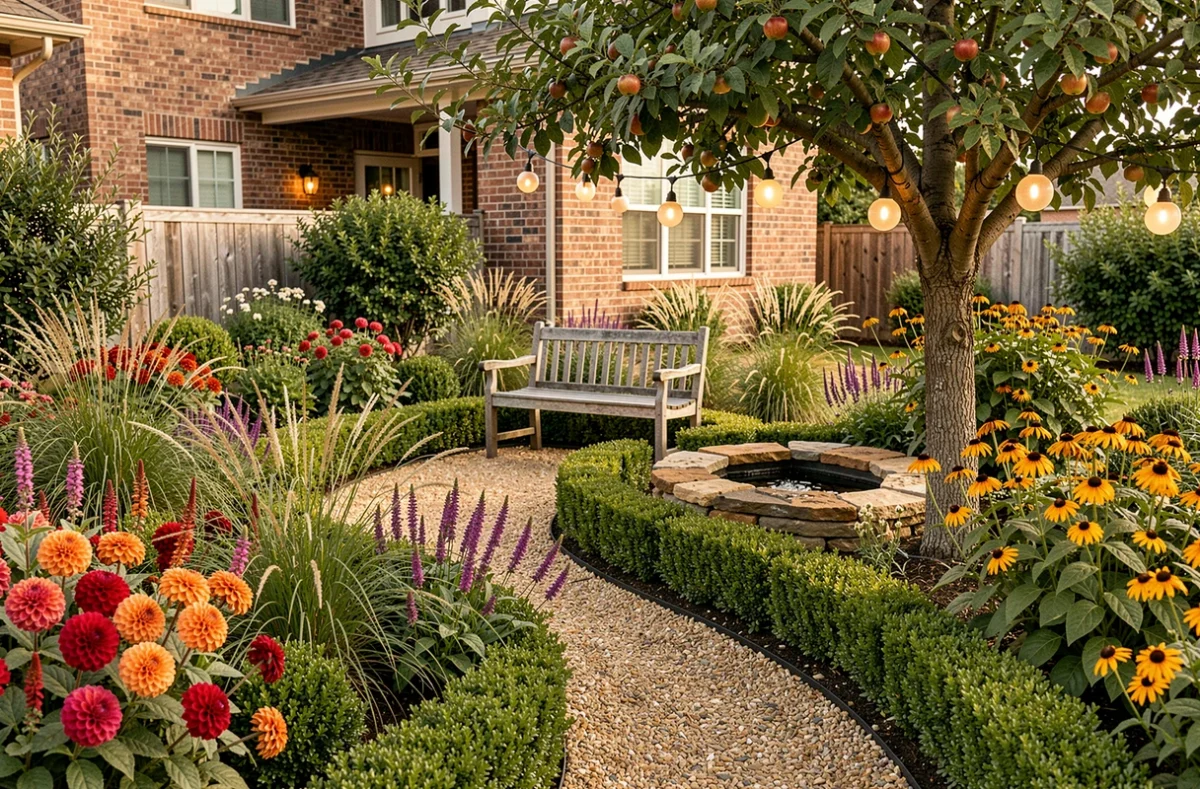
Climate change is pushing growing zones northward. Strawberry trees, rockroses and Spanish lavender are adapting to regions that were once too cold for them. Their success, however, depends on one specific factor: the soil must drain excess water in winter. An olive tree planted in a clay hollow won’t survive its second winter, even if it’s mild.
Native plants and pollinator-friendly plants
Choosing native plants that attract pollinators boosts garden biodiversity while reducing maintenance. A hedge of privet, elder and dogwood attracts pollinators, provides berries for birds and needs pruning only once a year.
- For soil that dries out in summer: yarrow, gaura, shrubby sage and blue fescue. Once established, these perennials can go several weeks without watering.
- For heavy, wet soil in winter: astilbe, ligularia and yellow flag iris. They can tolerate having their roots temporarily submerged.
- For year-round structure: ornamental grasses (miscanthus, feather grass) that remain striking even in winter.
Rainwater harvesting in the garden: the regulations have changed
Storing rainwater to water flower beds and vegetable gardens is a sensible response to summer water restrictions. Since September 1, 2024, the decree of July 12, 2024, has replaced the one of August 21, 2008, setting out the new health requirements for using water that is not fit for human consumption.
In practice, outdoor use (watering, washing the patio) is still easy to set up. A rainwater tank connected to a downspout, a basic filter and a tap are all you need. Indoor use is subject to much stricter rules, which are worth knowing before investing in a complete system.
Why does this choice matter for garden design? Because it affects where you place your planting areas. Positioning the most water-hungry beds near the tank reduces hose length and pressure loss. It’s a small design detail best decided early.
Living areas and wild areas: an inviting garden doesn’t need to be landscaped from end to end
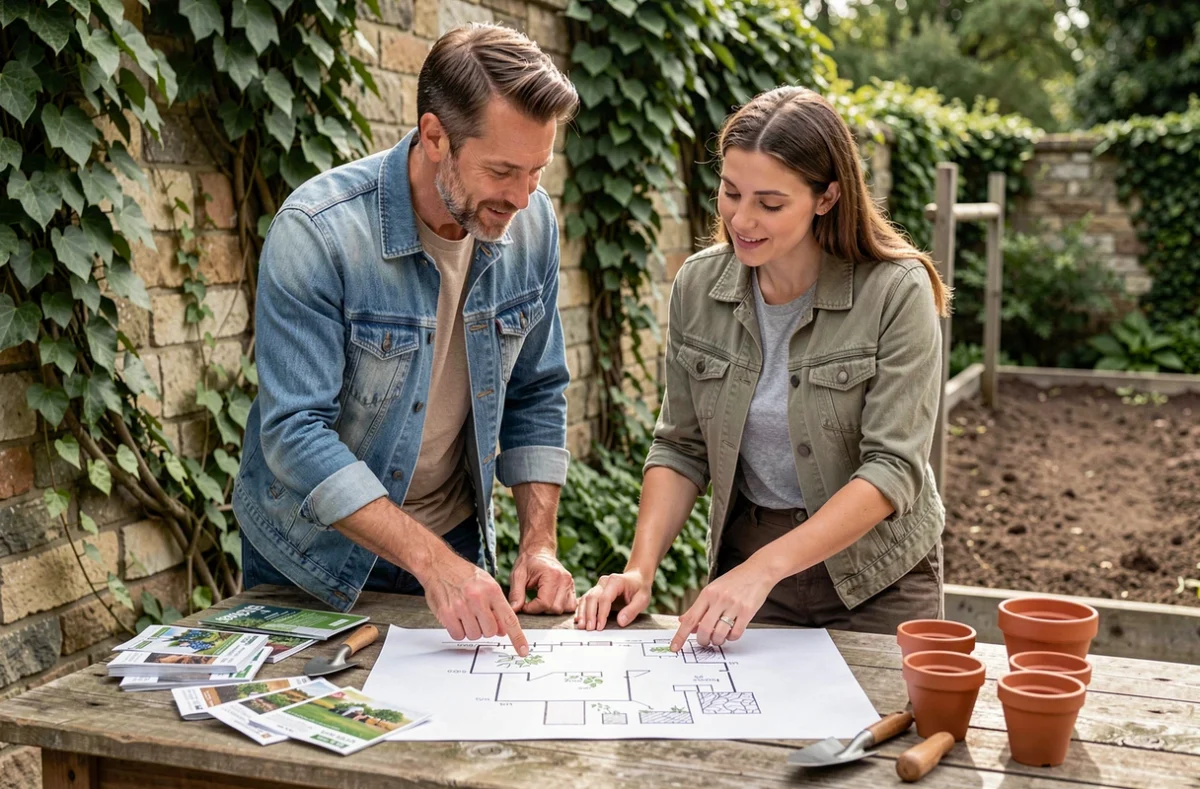
The usual temptation is to fill every square metre: a patio, neatly trimmed flower beds, a closely mown lawn and lighting everywhere. A more resilient, livelier garden does the opposite across part of its area.
Keeping a wilder area at the back of the garden (long grass, a pile of wood, stacked stones) creates habitats for beneficial garden wildlife such as hedgehogs, ground beetles and lacewings. These animals naturally control slug and aphid populations, reducing the upkeep required in cultivated areas.
This doesn’t mean giving up comfort. You can divide the garden into three zones:
- Living area near the house: patio, dining area and pots of herbs. A paved or stabilized surface makes it easy to access.
- Middle zone: flower beds, vegetable garden and flowering shrubs. This is the most cultivated part of the garden, and the area watered from the rainwater tank.
- Back of the garden: natural meadow, informal hedge and nesting boxes. Maintenance is limited to one or two cuts a year.
This layout creates visual depth. From the patio, your gaze passes through different layers of vegetation, making even a modest plot feel more spacious.
Avoiding pesticides throughout the garden is part of this approach. Alternatives (thick mulch, companion planting and targeted hand-weeding) take a little more time at first, but help stabilize the soil ecosystem over the long term.
A garden designed around its soil, climate and actual uses will age better than one planned from a catalogue. Plants fill out, drainage does its job and biodiversity takes hold. Maintenance decreases over the years instead of increasing, which remains the best indicator of a successful garden design.