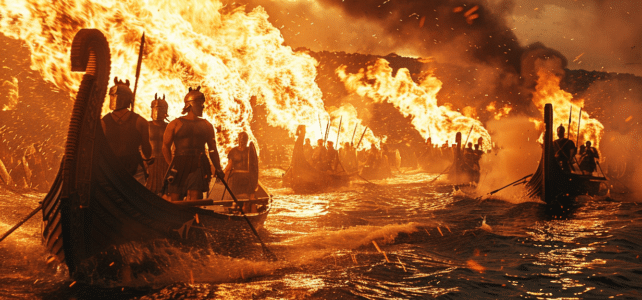
Since antiquity, incendiary weapons have been formidable tools of war, influencing the outcome of many conflicts. From the mythical Greco-Byzantine substance known as Greek fire to the devastating napalm bombs used during World War II and in Vietnam, these instruments of destruction have had a profound impact on military tactics and troop morale. The use of such weapons has often led to strategic turning points, sowing terror and destroying infrastructure. Their evolution reflects the constant quest for supremacy on the battlefields through the centuries.
The origins and evolution of incendiary weapons in military history
Incendiary weapons, these agents of destruction by fire, have left their fiery mark on military history. The Greek fire, for example, is one of the earliest manifestations of these war instruments, used with formidable effectiveness during the naval sieges of the Byzantine Empire. Imagine a substance so volatile that it ignited on contact with water, turning the surface of the sea into a liquid hell. This weapon, whose exact composition remains a mystery, illustrates the ability of armies to innovate to gain a strategic advantage.
Over the centuries, incendiary weapons have evolved, gaining in complexity and destructive power. World War I and World War II were pivotal periods in this evolution. The First World War introduced the massive use of incendiary shells, turning battlefields into infernos. Techniques refined until the advent of strategic incendiary bombings during World War II, where entire cities were reduced to ashes, as in Dresden or Tokyo, by planned firestorms.
The post-war period saw the emergence of new forms of incendiary weapons, such as the napalm bombs used by the American military during the Vietnam War. These weapons, designed to destroy shelters and vegetation, caused atrocious burns and destructive fires, leaving a lasting impression due to their cruelty. Incendiary munitions continue to be controversial military tools, regularly debated in international forums, particularly due to their devastating impact on civilian populations and the environment.
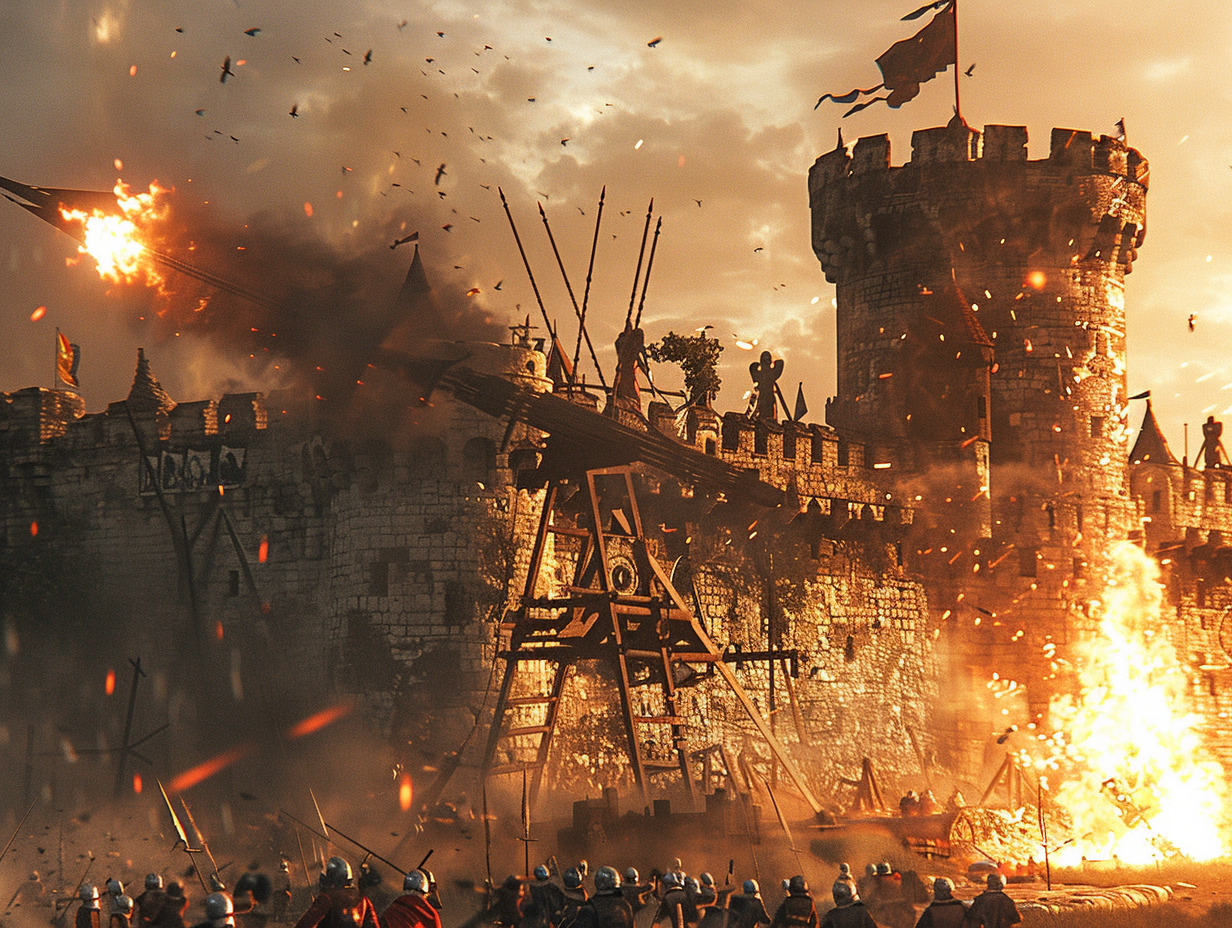
The impact of incendiary weapons on war strategies and humanitarian consequences
Incendiary weapons, beyond their destructive power, have profoundly influenced war tactics. Their ability to inflict widespread damage makes them particularly effective against infrastructure and densely populated areas. Their use raises serious ethical questions, particularly due to the disastrous humanitarian consequences. Attacks using white phosphorus in Gaza and Syria are glaring examples, having caused immeasurable suffering among civilian populations.
In light of these issues, the Convention on Certain Conventional Weapons (CCW) and its Protocol III aim to serve as legal instruments for regulation. Gaps remain, such as the exclusion of white phosphorus from the definition of incendiary weapons by the Protocol. Organizations like Human Rights Watch and the Harvard Law School International Human Rights Clinic (IHRC) are calling for a strengthening of this legal framework to better protect civilians and limit the use of such munitions.
These controversial weapons also alter the code of war, pushing states to evaluate the boundaries between military effectiveness and moral responsibility. The collateral damage caused by incendiary weapons is not limited to the immediate effects of flames but also includes long-term repercussions on the environment and human health. Deep burns, organ failures, and psychological trauma are all testimonies to the brutality of these weapons.
International engagement through CCW review conferences and the actions of the International Committee of the Red Cross highlight the need for an adapted international humanitarian law. Despite progress, the arms race and international armed conflicts continue to test the limits of these agreements. Finding, in this context, the balance between military necessity and respect for human dignity remains a major challenge for decision-makers worldwide.