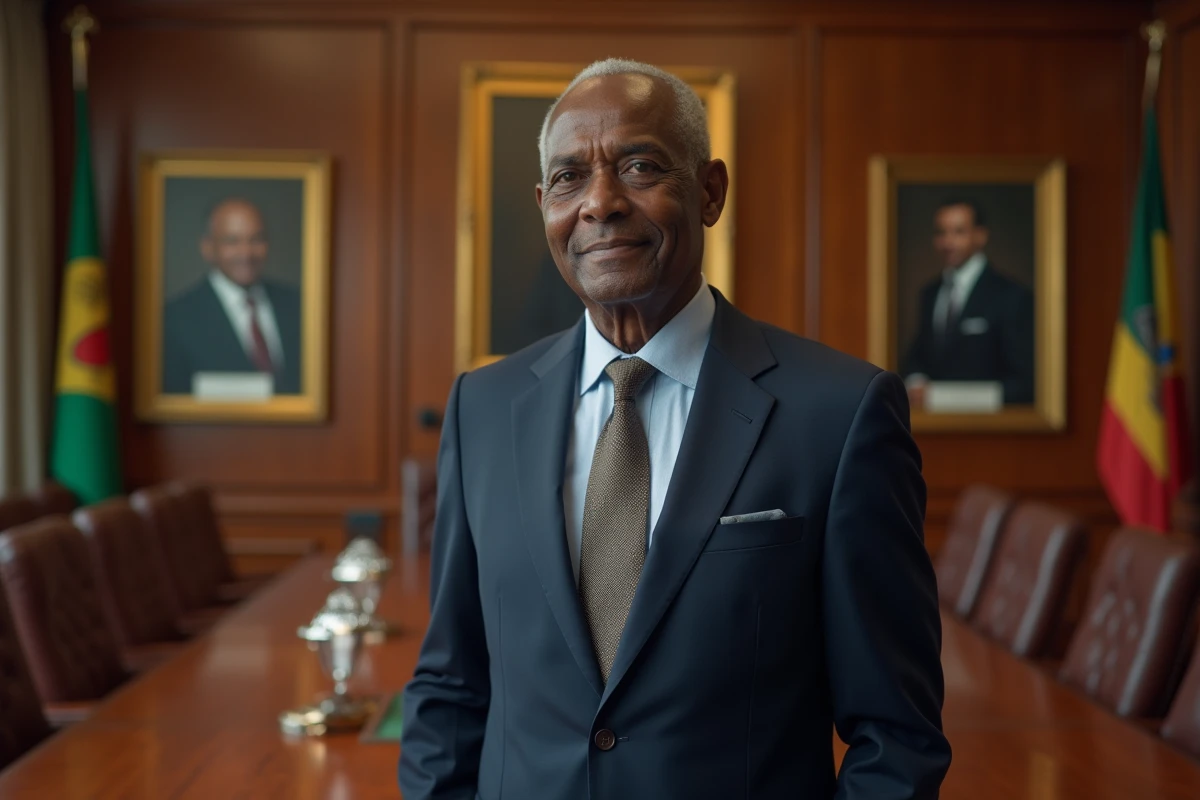
How much does the president of the African Union earn, and how does this package compare to the salaries of other leaders of international organizations or heads of state on the continent? Exact amounts remain difficult to obtain: the AU does not publish a detailed salary scale for its top officials, which fuels an ongoing debate about the financial transparency of the pan-African institution.
Salary Opacity at the AU and Perception Among Young African Generations
The lack of official publication of the presidential salary distinguishes the African Union from most comparable international organizations. Neither the institutional website nor the publicly released annual reports detail the exact remuneration of the president of the Commission or the current chairperson of the AU.
This opacity produces a measurable effect on the perception of the institution. Young African professionals aspiring to careers in continental or international organizations face a paradox: mid-level grades (P5, P6) have accessible scales, while the top of the hierarchy remains in the shadows. To better understand the amount of the salary of the president of the African Union, one must cross-reference estimates from internal reports and specialized media.
The lack of transparency fuels two opposing interpretations. On one hand, there is suspicion of excessive remuneration given the economic realities of the continent. On the other, there is the idea that these packages remain modest compared to UN or European standards. Both interpretations coexist due to the absence of official data.
Estimated Remuneration of the AU President Compared to International Organizations
The gross annual remuneration of the president of the African Union Commission is estimated to be around 220,000 dollars, benefits included, according to the most cited estimates in specialized media. This amount includes the base salary and certain benefits, without the precise details of each component being made public.
| Position / Institution | Estimated Annual Remuneration | Transparency |
|---|---|---|
| President of the AU Commission | About 220,000 dollars (benefits included) | Not officially published |
| UN Secretary-General | Public scale, significantly higher | Published |
| President of the European Commission | Public scale, higher | Published |
| African heads of state (wide range) | Variable by country | Rarely published |
The contrast lies less in the amounts than in the degree of transparency. UN and European institutions publish their salary scales, allowing for citizen oversight. In contrast, the AU does not make public the detailed components of the presidential package.
In-Kind Benefits and Discretionary Funds
Beyond the base salary, the current president of the AU benefits from a range of perks that largely escape public debate:
- An extended diplomatic immunity, comparable to that granted to leaders of major international organizations
- A discretionary fund for pan-African initiatives, the amount and usage details of which are not subject to detailed public reporting
- Coverage of representation, travel, and security expenses related to AU summits and diplomatic missions on the continent and abroad
These in-kind benefits constitute a significant part of the overall package, and their absence from public discussions reinforces the impression of opacity.
Revision of Salary Scales and Competitiveness of Executive Positions in Africa
Since 2024, the salary scales for mid-level and senior grades (P5-P6) of the AU have been revised upwards. The stated goal: to attract pan-African talent in the face of competition from international organizations based outside the continent.
This regional competitiveness strategy reflects an awareness. African institutions regularly lose experienced staff to better-paying organizations in Geneva, New York, or Brussels. By raising the scales for executive positions, the AU seeks to reverse this trend.

The African Development Bank (AfDB), another major institution on the continent, publishes its grade and salary data. This relative transparency offers a useful point of comparison: leadership positions at the AfDB show documented levels of remuneration, facilitating the recruitment of international profiles.
Mobility of Leaders and Talent Pools
Recent analyses indicate a correlation between the rotation of AU presidents and the acceleration of executive talent mobility on the continent. The establishment of active regional talent pools since late 2025 aims to structure this dynamic.
For young African executives, the path to continental leadership positions remains unclear. The absence of a public salary scale for the AU’s top positions complicates the assessment of these careers compared to those offered by the private sector or traditional international organizations.
Funding of the AU by Member States and Budgetary Pressure
The budget of the African Union relies on contributions from member states, supplemented by external funding. This partial dependence on international donors fuels a debate about the financial sovereignty of the institution.
- Contributions from member countries vary according to their economic weight, with a few states providing a disproportionate share of funding
- Peace and security missions absorb a considerable fraction of the budget, reducing the margin for operational expenditures
- The AU headquarters in Addis Ababa concentrates most administrative costs, including the remuneration of executive staff
In this context, any increase in presidential remuneration faces the budgetary reality of an organization whose several members struggle to meet their contributions. The question of the salary of the president of the Commission is therefore not isolated: it is part of a constant balancing act between the attractiveness of positions and the financial constraints of the continent.
The debate remains open. As long as the AU does not publish a complete salary scale for its top leaders, estimates will continue to circulate without official grounding, and the question of the perceived legitimacy of these remunerations will remain, particularly among generations who see pan-African institutions as both a career lever and a political tool.