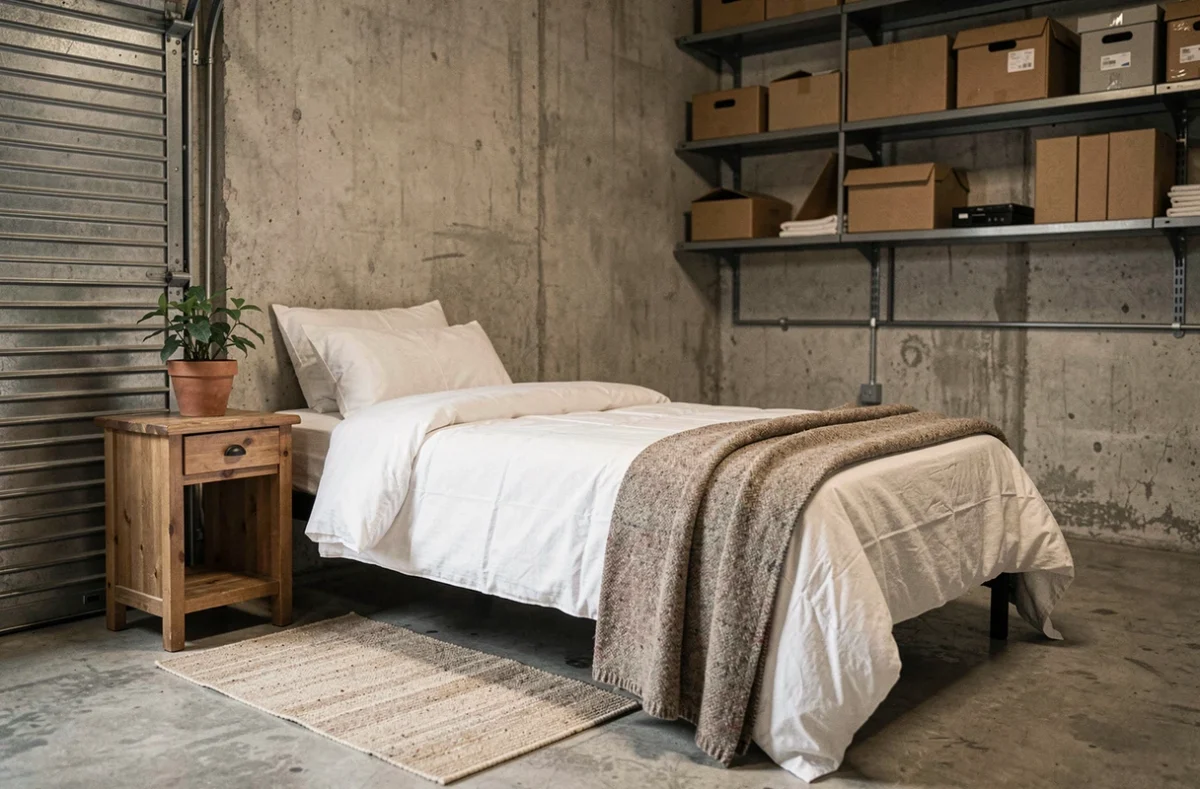
Sleeping in your garage is a solution that crosses the mind when the heat makes the bedroom unlivable, when a relative shows up unexpectedly, or when space is simply lacking. Before laying a mattress on the concrete floor, it’s better to understand what French regulations provide, the concrete health risks, and especially what happens with insurance if things go wrong.
Home insurance and undeclared garage: the real financial trap
Most home insurance contracts cover the garage as an outbuilding, not as a living space. This distinction changes everything in the event of a claim.
If a fire breaks out in a garage where you regularly sleep, the insurer may invoke an undeclared change in risk. Specifically, your contract provides for parking or storage use. Living there, even occasionally, alters the nature of the covered risk.
Have you ever looked at the clauses in your multi-risk home insurance contract? Most mention an obligation to declare any change in the use of the insured premises. Ignoring this clause exposes you to a partial or total denial of compensation. And this denial can concern the garage itself, as well as the rest of the dwelling if the damage spreads.
Carbon monoxide poisoning represents another common scenario in garages. A water heater, a boiler, or simply a vehicle parked nearby can release this odorless gas. If the occupant is hospitalized and the insurer discovers an undeclared residential use, the coverage of the claim may be contested. To delve deeper into this topic, you can find practical advice from Le Blog de Coco detailing the precautions to take before settling in.
French regulations on living in a garage
In France, a garage is classified as an annex in urban planning documents. It does not have the status of a living space. For a space to be considered habitable, it must meet specific criteria for area, ceiling height, ventilation, and natural lighting.
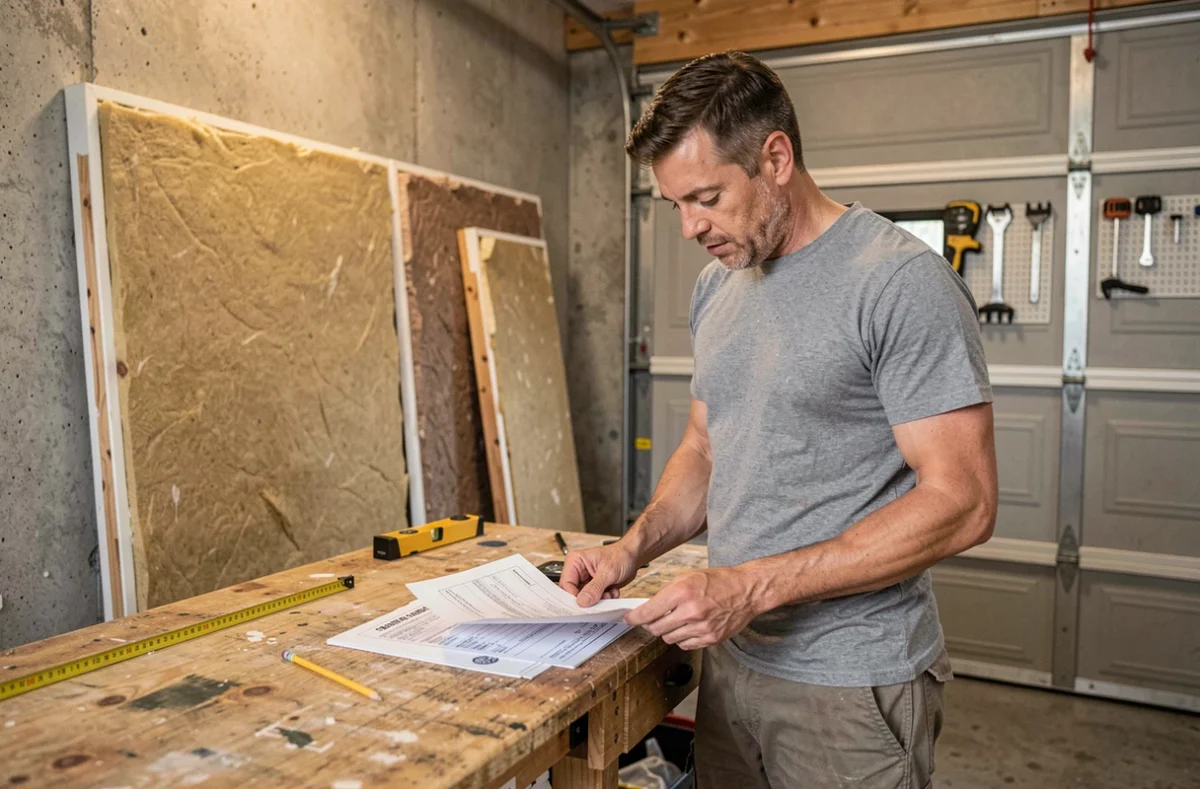
Transforming a garage into a bedroom therefore implies a change of use under the urban planning code. Depending on the area concerned, a prior declaration of work or a building permit must be submitted to the town hall. Without this step, occupying the garage as a dwelling remains irregular.
Why does this formality matter so much? Because it conditions everything else. Without an official change of use:
- The garage does not count as living space in the calculation of housing tax or property tax, which constitutes a tax irregularity.
- In co-ownership, the regulations generally prohibit the use of garages for living purposes, and other co-owners can demand a return to the original use.
- In case of rental, the landlord exposes themselves to legal action for providing a dwelling that does not meet the decency criteria defined by law.
Concrete health risks when sleeping in a garage
A garage is not designed to accommodate a sleeper. Air circulation is poor, thermal insulation is often absent, and several sources of danger coexist in a confined space.
Air quality and ventilation
The first problem is ventilation. A standard garage rarely has a ventilation system that meets residential standards. Volatile organic compounds (paints, solvents, motor oils stored on-site) accumulate in the ambient air. Breathing in these substances every night increases the risk of chronic respiratory irritations.
Carbon monoxide remains the most serious danger. It only takes a poorly adjusted space heater or a running engine for a few minutes in a closed space to reach toxic concentrations.
Humidity and temperature
Raw concrete slabs and uninsulated walls promote condensation. Sleeping in a humid environment encourages the growth of mold, which can trigger allergies or respiratory problems over time. In winter, the temperature in an uninsulated garage can drop very low, making sleeping uncomfortable and potentially dangerous without adequate heating.
Furnishing a garage for sleeping: technical priorities
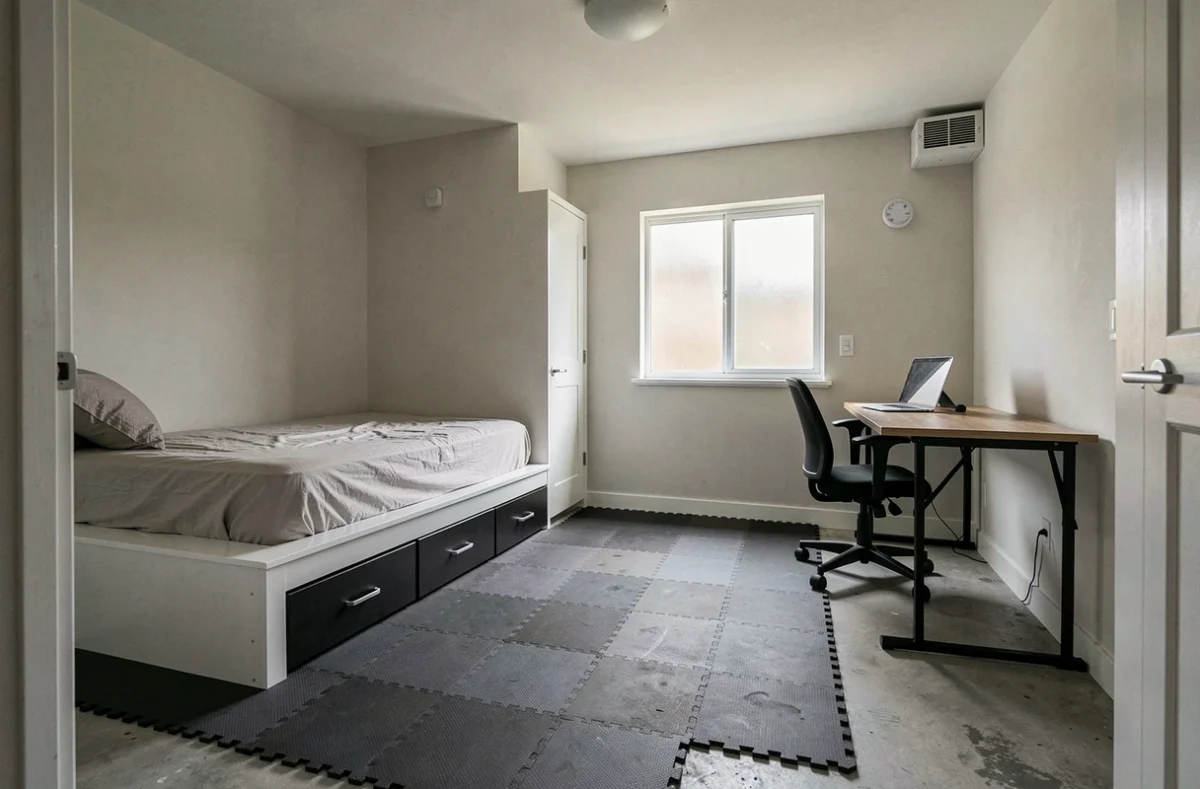
If despite regulatory constraints you plan to sleep occasionally in your garage (while waiting for renovations, for example), certain adjustments can reduce risks.
- Install a carbon monoxide detector near the sleeping area. This device costs a few dozen euros and can save a life.
- Ensure minimal ventilation: keep an opening (window, ventilation grille) to continuously renew the air, even in cold weather.
- Remove any chemicals, solvents, or fuel cans from the sleeping area. Store them in a separate room or outside.
- Place insulation on the floor (thick rug, rigid insulation board) between the concrete and the mattress to limit cold and moisture rising.
- Never use combustion heating (kerosene heater, brazier) in a closed garage.
These measures do not replace compliance, but they limit risks for temporary and occasional use.
Sleeping in your garage without declaring anything combines legal risk, health risk, and insurance risk. Even for occasional use, notifying your insurer remains the least costly precaution. If the occupation is to last, changing the use at the town hall and carrying out insulation and ventilation work transforms an annex into a truly habitable space, legally.