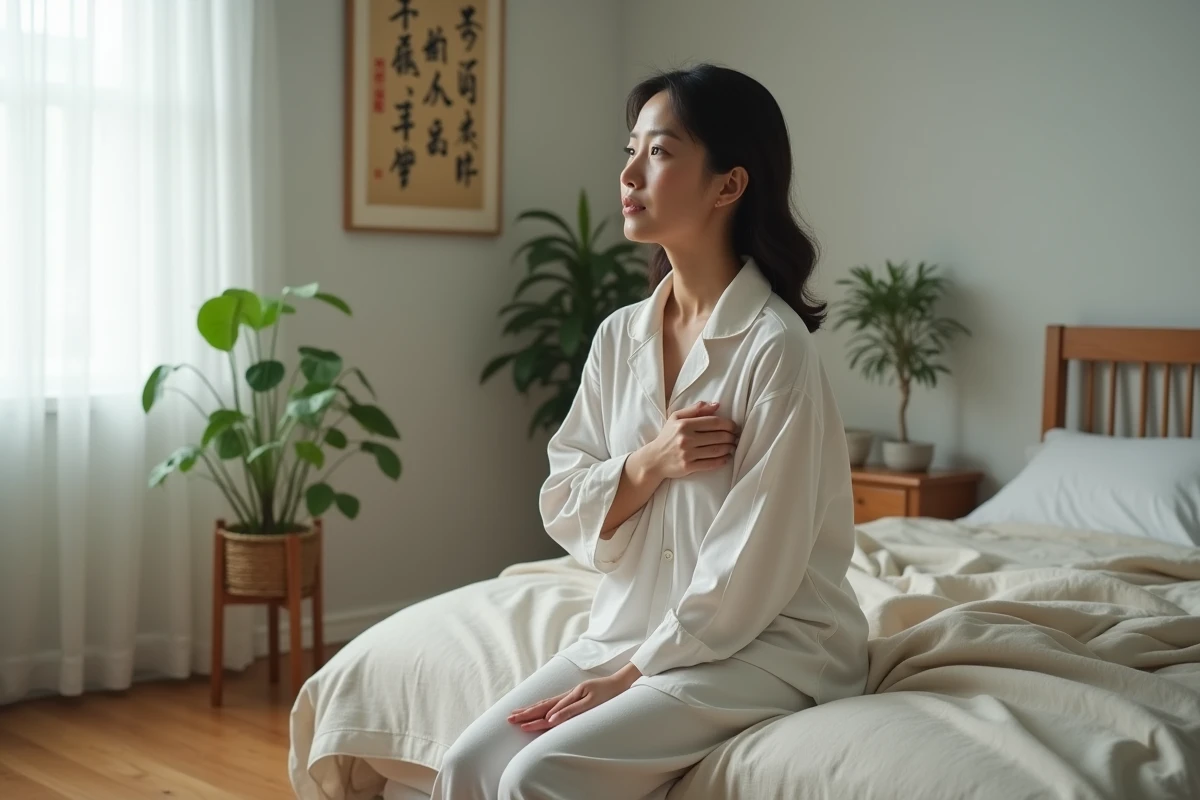
Waking up every day at 5 AM is not just a whim of the clock. According to traditional Chinese medicine, this moment corresponds to the handover between two major organs of energy circulation: the lungs, followed by the large intestine. In this ancient approach, every stir at dawn says something about the body, much more than just a simple case of insomnia.
Why do we wake up at the same time every night?
In this view, sleep is not just a simple routine divided into cycles. Nighttime awakenings, especially if they occur at the same time, tell a precise story of imbalance. The energy clock acts as the conductor here: between 3 AM and 5 AM, the lungs are in full activity, then the large intestine takes over until 7 AM. Nothing is left to chance.
For each time slot, Chinese medicine associates an organ and a dominant emotion. If nights are marked by a repeated awakening at a fixed hour, the body’s message is clear: an internal tension, emotional or energetic, seeks to express itself. Chronic stress, this discreet poison, disrupts the flow of qi and ultimately disturbs the balance between body and mind.
Experts in this discipline urge not to ignore this regularity. Here’s how Chinese medicine deciphers these nighttime awakenings:
- Between 1 AM and 3 AM: the liver dominates, its activity is associated with anger and detoxification of the body.
- Between 3 AM and 5 AM: the lungs, carriers of emotions related to sadness and mourning, take over.
- Between 5 AM and 7 AM: the large intestine intervenes, linked to difficulties in moving on or eliminating what weighs heavily.
The meaning of waking up at 5 AM becomes clearer through this lens: it often expresses an emotion that needs regulation, blocked energy, or an organic disorder overlooked by Western medicine. This nighttime dialogue, where each organ whispers its needs, provides a different interpretation of early awakenings and persistent insomnia.
The Chinese organ clock: understanding the link between organs and sleep cycles
Chinese medicine offers a holistic view of sleep: it is impossible to separate the mind from the body, nor to ignore the ebb and flow of vital energy, the famous Qi, through each organ. Each nighttime time slot corresponds to a peak in the activity of a particular organ, which influences both the quality of rest and emotional state.
The cycle begins with the liver, from 1 AM to 3 AM: this period resonates with anger or the need to eliminate toxins. Then, from 3 AM to 5 AM, the lungs take center stage, carrying emotions associated with sadness and deep breathing. Finally, between 5 AM and 7 AM, the large intestine watches over, symbolizing the ability to let go of the past, both emotionally and physically.
The Chinese biological clock thus links nighttime awakenings to the physiological needs of the body. Waking up at 5 AM is not trivial: it is precisely the moment when the large intestine is working at its maximum. The body, in its own way, tries to free itself, to digest the old to make way for the new.
Sleep, a direct reflection of internal balance, reveals the hidden tensions of the meridians and the circulation of Qi. Knowing how to read this clock is to learn to decode the language of the body, where each time slot resonates with an emotion and an organ function.
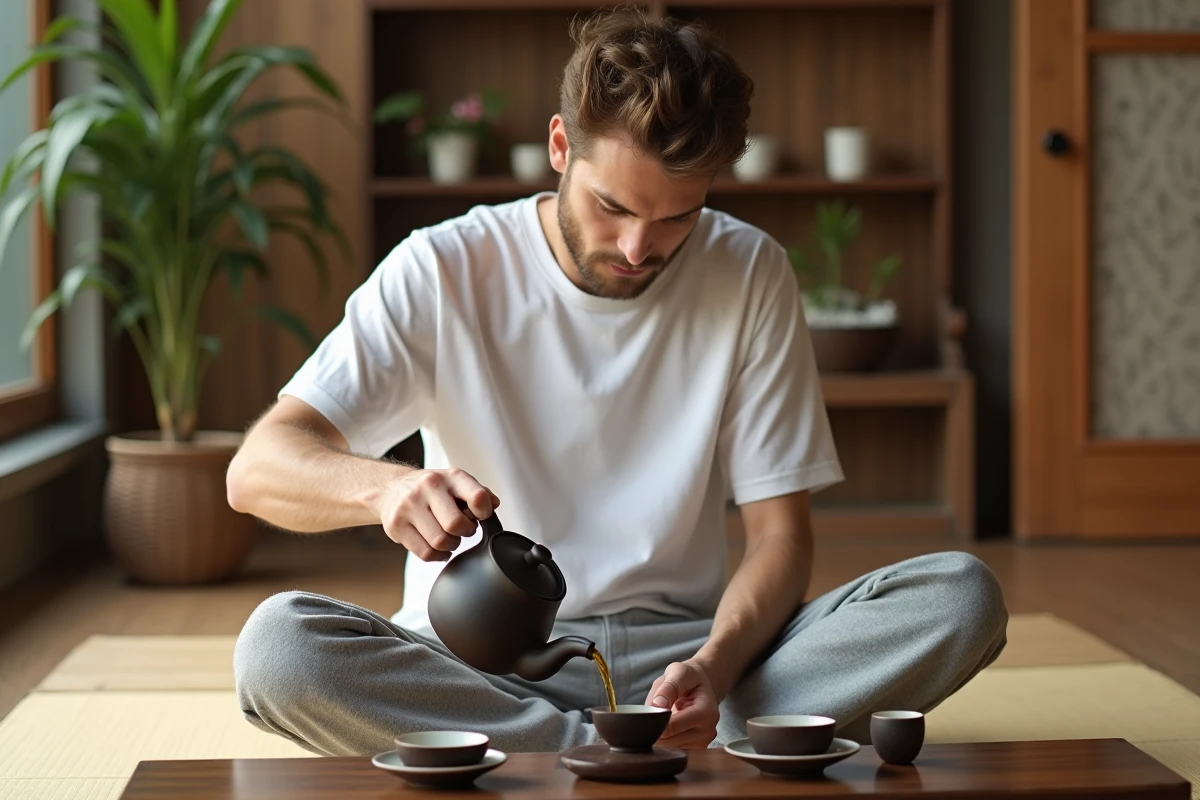
Exploring the avenues of Chinese medicine to regain restorative sleep
From this perspective, quality sleep cannot be built without a global harmony of the body. To restore this coherence, Chinese medicine relies on several tools, all centered around the circulation of vital energy and the support of the organs.
Acupuncture, for example, targets specific meridians to relax the nervous system and restart the Qi. Practitioners observe that needles placed on points related to the liver or large intestine promote deeper sleep and stable rest.
In addition, herbal medicine and Chinese pharmacopoeia offer plants suited to each situation: they support liver detoxification, improve digestion, and allow for letting go, a necessary condition for surrendering to sleep. Diet also plays its role: adjusting meals to lighten the liver’s load and strengthen intestinal flora can transform morning awakenings into peaceful nights.
Energy massages, such as Tui Na, provide a concrete response to accumulated tensions due to stress. Combined with moxibustion, they fit into a holistic approach where each gesture aims to restore energetic fluidity and care for emotions. Establishing a bedtime ritual, listening to the body’s signals, ensuring meal coherence: all these are levers to reconnect with truly restorative sleep.
Ultimately, each awakening at 5 AM becomes an invitation to listen to one’s body differently. Those who pay attention to this nighttime ballet can gradually transform these signals into new markers towards balance.