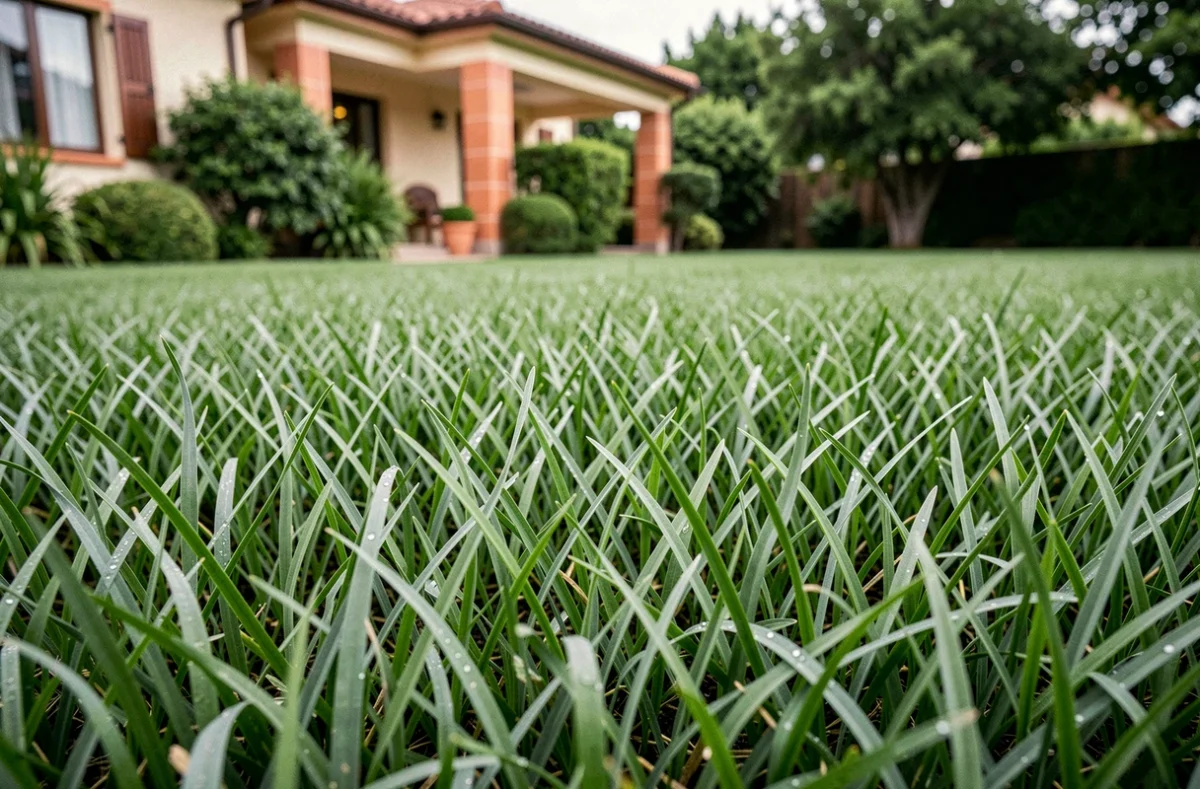
The hybrid C4 grass refers to a grass species whose photosynthetic metabolism fixes CO₂ into four-carbon compounds before integrating it into the Calvin cycle. This mechanism, inherited from tropical plants, gives it a higher yield in warm conditions compared to C3 grasses (ryegrass, fescues, and timothy) that dominate the shelves of French garden centers.
C4 Photosynthesis and Water Stress: The Game-Changing Mechanism
In a C3 grass, photorespiration increases significantly when temperatures exceed 30 °C. The plant wastes some of the captured energy, slows its growth, and turns yellow. A C4 grass bypasses this problem by concentrating CO₂ in specialized cells (perivascular sheath cells) beforehand.
Photorespiration remains low even under high heat. The grass continues to grow, maintains its color, and, most importantly, consumes significantly less water per gram of dry matter produced. This gain in water efficiency is the primary technical argument in favor of hybrid C4 grasses for gardens exposed to dry summers.
To better understand the characteristics of hybrid C4 grass, it is essential to distinguish between wild species (common cynodon, kikuyu) and hybrid cultivars selected in research stations to combine fine density, rich color, and tolerance to foot traffic.

Hybrid Bermuda Grass Cultivars: Beyond Generic Cynodon
The term “C4 grass” encompasses several families (cynodon, zoysia, paspalum, kikuyu). In garden use, hybrid Bermuda grass (Cynodon dactylon x Cynodon transvaalensis) draws attention because it combines fine leaf texture and rapid regeneration capacity through stolons and rhizomes.
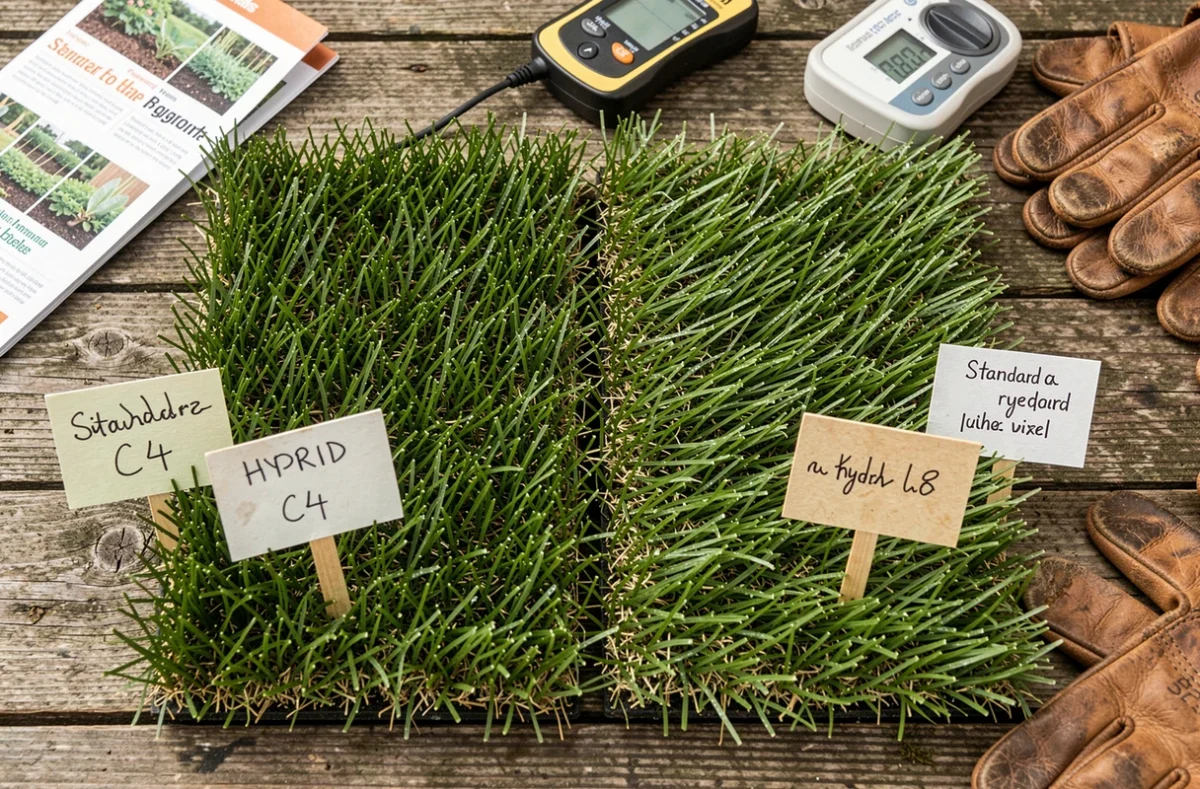
Not all hybrids are equal. The TifTuf cultivar, developed from the turfgrass program at the University of Georgia, has shown in multi-year trials under controlled drought conditions that it maintains acceptable quality with about 38% less water than a classic hybrid like Tifway 419. This type of data is more significant than a marketing label of “drought-resistant.”
Criteria for Choosing a Cultivar for a Private Garden
- Leaf fineness: the narrower the leaf, the closer the visual appearance is to an ornamental C3 grass. Recent hybrids compete with the best fine fescues in this regard.
- Colonization speed: a vigorous hybrid fills bare areas in a few weeks during summer, which limits manual weeding.
- Shade tolerance: this is the Achilles’ heel of Bermuda grass. A partially shaded garden would lean more towards zoysia, which is less demanding for direct light.
- Winter dormancy: all Bermuda grass turns yellow below a certain temperature threshold. The duration of this dormancy varies depending on the cultivar and climate zone.
Winter Dormancy of C4 Grass: A Real Constraint or a False Problem
Dormancy remains the main barrier to the adoption of C4 grasses in French gardens. When nighttime temperatures regularly drop below 10 °C, Bermuda grass enters vegetative rest. The foliage changes from green to straw brown.
In southern France (Mediterranean arc, southern Atlantic coast), this period lasts a few months. The further north you go, the longer the dormancy window extends, which reduces the aesthetic appeal of C4 grass for primary use.
Some professionals practice fall overseeding with annual ryegrass (a technique known as “overseeding”) to maintain green cover during winter. This approach works but adds a maintenance task, and the ryegrass competes with Bermuda in the following spring. In a family garden, it is better to accept dormancy than to multiply interventions.
Herbicide-Free Maintenance: What Regulations Impose
Since July 1, 2022, a decree from January 15, 2021, prohibits most synthetic herbicides in private gardens in France. This constraint alters the management of hybrid C4 grass in two ways.
The first concerns the weeding of weeds during the establishment phase. A seeded Bermuda grass takes several weeks to cover the ground. Without selective herbicide, manual hoeing or prior false seeding (preparing the soil, allowing weeds to germinate, mechanically destroying them, then seeding) become the only viable options.
The second affects the control of cynodon itself. Bermuda grass is a spreading plant. Its stolons invade neighboring flowerbeds, borders, and vegetable gardens. Without a systemic herbicide, the only effective barrier remains physical: a buried border at least 15 cm deep to block the progression of rhizomes.
Reasoned Watering of an Established C4
A well-rooted hybrid C4 grass tolerates prolonged dry periods, but “tolerate” does not mean “thrive without water.” In the height of summer, deep and spaced watering (rather than frequent and shallow) encourages deep rooting.
- Water early in the morning to limit evaporation and fungal diseases.
- Aim for an application that moistens the soil in the first few centimeters deep, then allow it to dry between waterings.
- Gradually reduce watering in the fall to accompany the onset of dormancy without abrupt stress.
Municipal water restrictions, increasingly common in summer, make this advantage concrete: where a C3 grass wilts due to lack of permitted watering, a hybrid C4 like TifTuf maintains an acceptable appearance with reduced water volume.
The hybrid C4 grass is not a miracle product suitable for all gardens. Its area of relevance remains hot summer zones, well-drained soils, and sunny exposures. Outside of these conditions, a good C3 mix suited to the local terroir will perform just as well, without the constraint of winter dormancy.